Dents, Cracks and Tall Rooms
Most interior repaints start with the same complaint: the color is tired, and the walls underneath have a history. Nail holes from three picture arrangements ago, a hairline crack over a doorway, a dent where the vacuum keeps catching the hallway corner. Fresh paint doesn't hide any of that. A new coat in a glossier sheen makes every flaw easier to see, which is why the patching decides how a room looks more than the color does.
Then there are the rooms homeowners put off. A vaulted ceiling over the living room, an open stairway with a long drop beside it: people live with a faded stairwell for years because nobody wants to deal with it. Cloudland's interior page names both outright, vaulted ceilings and open stairways, as work the crew handles. That is worth raising early, because those are the spaces that turn a repaint into a real project.
Ray Sola has worked in residential painting since 1985, and his crew paints newly built homes, condos and older houses where the walls have had decades to settle. Each of those asks for a slightly different kind of prep, and the written estimate is the place to talk through which kind your walls need.
Prep First, Then Color and Sheen
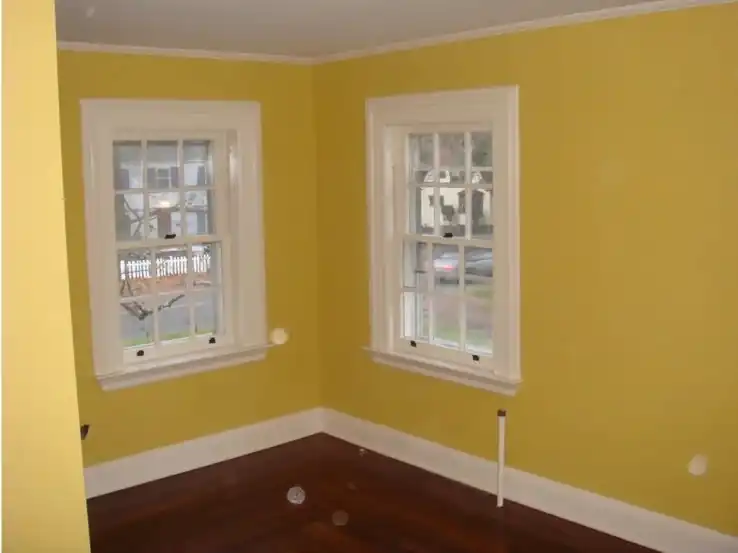
The sequence on an interior job is simple to say and slow to do. Patch what's damaged, sand it flush, and only then does paint go on. Cloudland describes its prep this way, patching and sanding, and it is the part that separates a repaint that looks crisp from one that looks like the walls were just colored in. Skipped prep shows up in raking light, usually beside a window, a month after the crew has gone.
Before any can is opened, the crew protects what's already in the house: windows, skylights and floors. Skylights are easy to forget and hard to clean once a drop of paint or a stray brush hair reaches the glass, so they get covered with the same care as the hardwood. The goal is that the only thing different in the room afterward is the paint.
Choosing the color is the part people lose sleep over, and Cloudland helps with it, along with the finish. As general rules of thumb, a matte finish forgives wall flaws, satin wipes clean in a hallway, and semi-gloss belongs on trim. Those aren't promises about your house. The crew can look at how light moves through the room and tell you which sheen will hold up where your family actually lives.
Furniture, Cleanup and No Surprises
Furniture is the question that comes up on every estimate, and the answer is split. Cloudland asks homeowners to remove small or valuable items beforehand: picture frames, lamps, anything with a story attached. The team then helps protect and move the larger furniture as needed. That keeps a bookcase from becoming your weekend project.
Cleanup matters as much as the painting. Marsha Miller wrote in her Google review that Ray answered her call and arrived at her home for an estimate the same day, and that the crew "cleaned up after without a trace." Floors and furniture are covered before any work starts, and the point of that covering is that a room can go back to being a room the afternoon the job ends.
Every job starts with a written estimate, and the phrase Cloudland uses for the experience is no surprises, no drama. The process is built so you're kept informed if something unexpected turns up behind a wall. And if you're planning a winter project, ask about their winter interior offer for jobs booked in January or February.